
The Quetzal - Jewel of the Cloud Forest
A magnificent bird, a symbol of freedom for the Mayans and an icon of our highland forests.
A Sacred Symbol
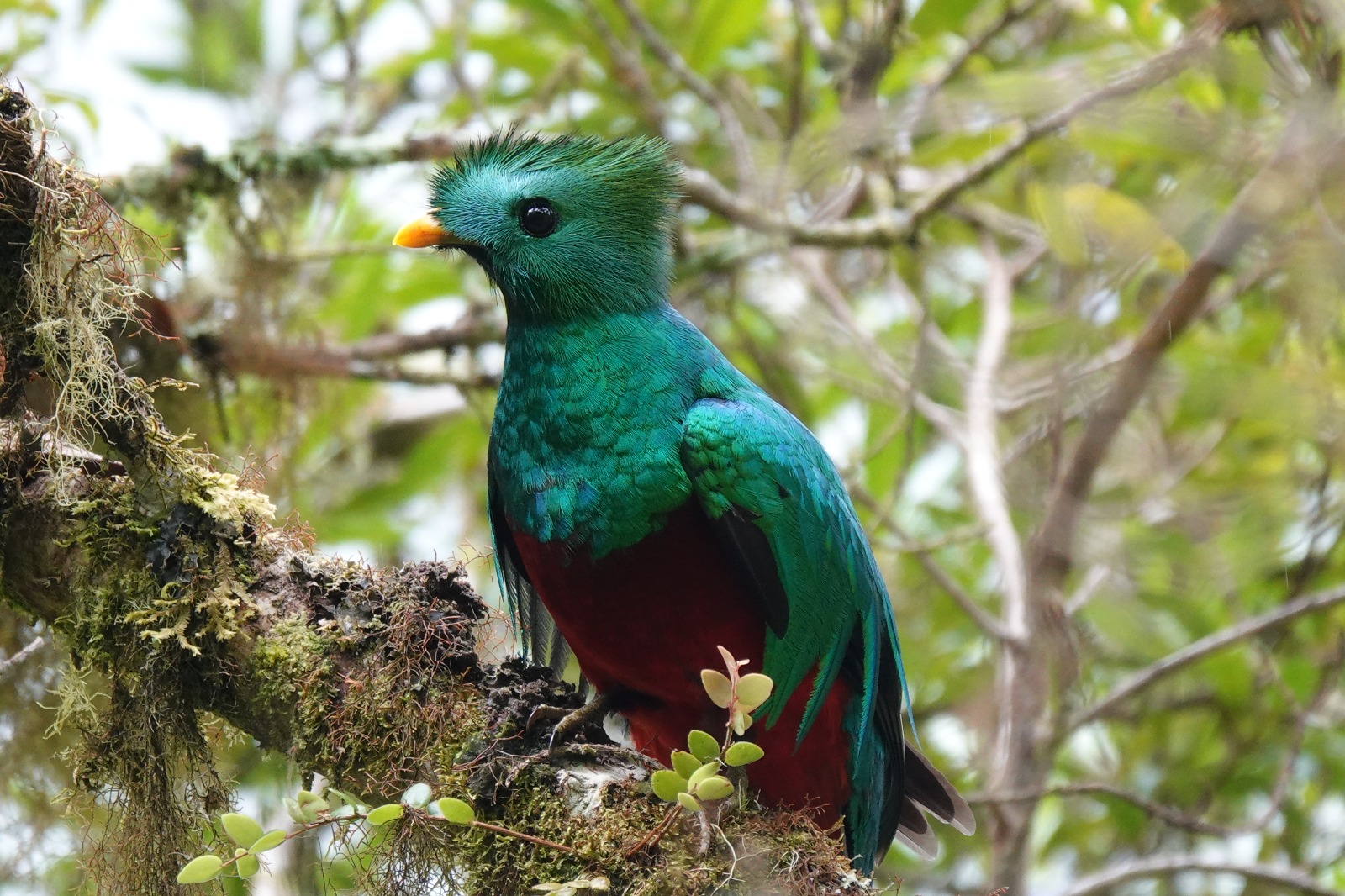
The Resplendent Quetzal has long been revered.
For the ancient Mayans, it symbolized freedom, for it is said to die if confined in captivity.
It was also a symbol of wealth and power — its vibrant feathers were once used as currency and royal ornamentation.
My fascination with this bird began in the early 1980s, when I lived with the Kaqchikel people on the shores of Lake Atitlán in Guatemala.
Today, it is part of my daily life in the Talamanca mountain range, where I’ve lived for the past 18 years in its beloved cloud forest habitat.
Daily Encounters
From my terrace, I often watch the quetzal’s chaotic, fluttering flight in the early mornings and evenings as it searches for the seeds of the White Cigua tree it loves.
Sometimes it lands on the cedar tree overlooking my home, calling out with its distinctive rallying cry or giving the short, chattering cackle that signals it’s about to take flight.
Its song resonates through the La Amistad National Park forest that surrounds the farm — a soundtrack to the magic of the cloud forest.
Breeding Season
In February, the quetzals arrive to reunite with their mates or form new pairs.
We hike up to the ridges to observe them. They are not shy — in fact, they are curious, often gathering in groups before searching for a rotting tree hollow to prepare as a nest.
- The female lays two eggs
- Both parents share incubation duties:
- Male during the day
- Female at night
- Incubation lasts 17–19 days
- They defend their territory with a distinctive two-part call
The parents work as a team to guard the chicks against predators such as snakes, toucans, and raptors. I have even seen them help a fallen chick climb back to the nest.
Their diet here at Wild on the Farm includes:
- Seeds of Lauraceae species such as white Cigua
- Bambito seeds
- Wild avocado
- Occasionally, insects
Fledging and Migration
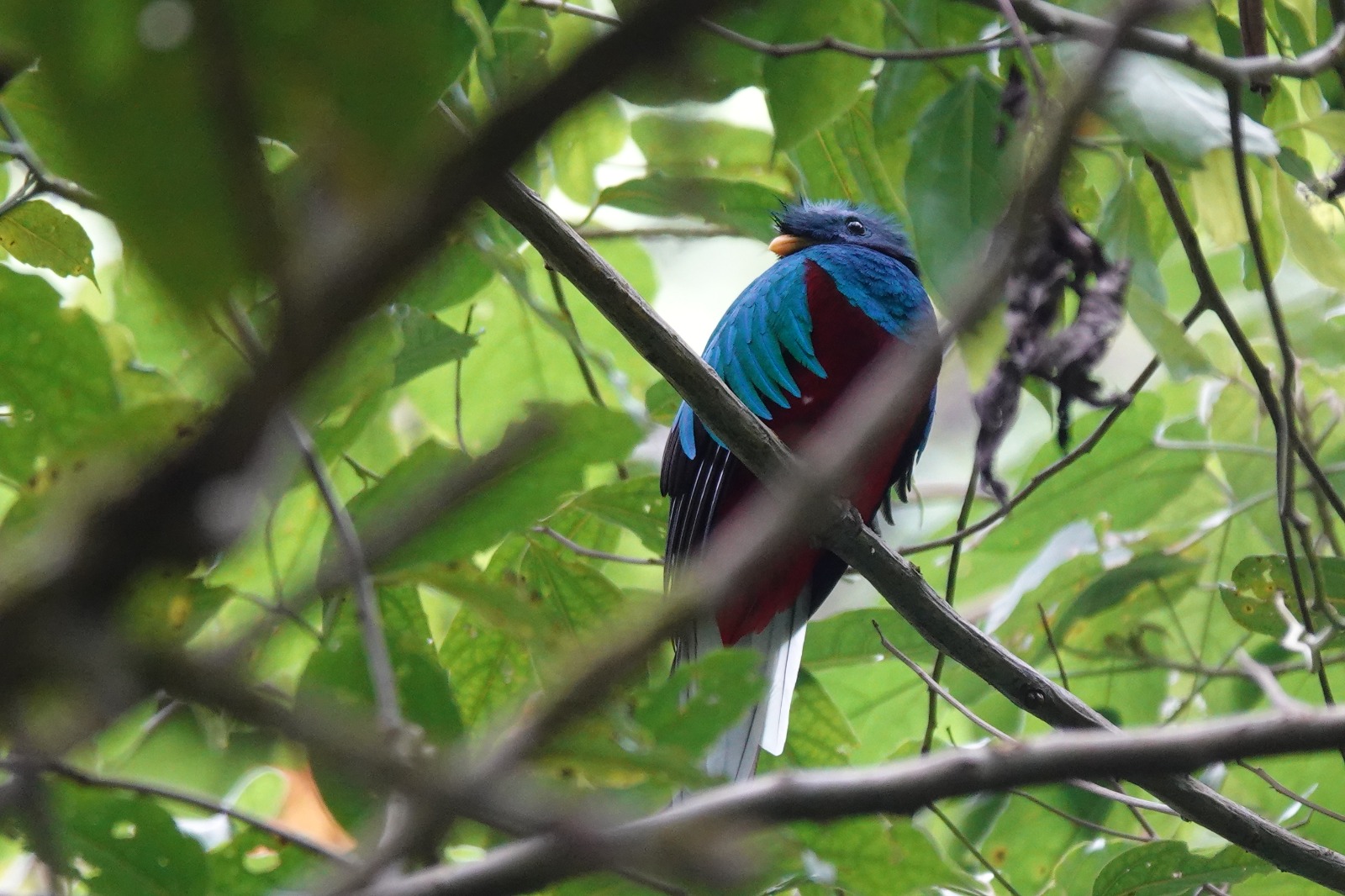
At around five months old, the young quetzals learn to fly and find food.
This stage is noisy and active, as families form large, vocal groups. It’s one of my favorite times to observe them.
When the food supply in the highlands is depleted, they migrate together to lower elevations in search of new resources.
Here in our mountains, we are privileged to host them for six to seven months each year. Then comes the quiet season — waiting for their return, their vibrant colors, and their enchanting songs to fill the forest once again.
Closing Thoughts
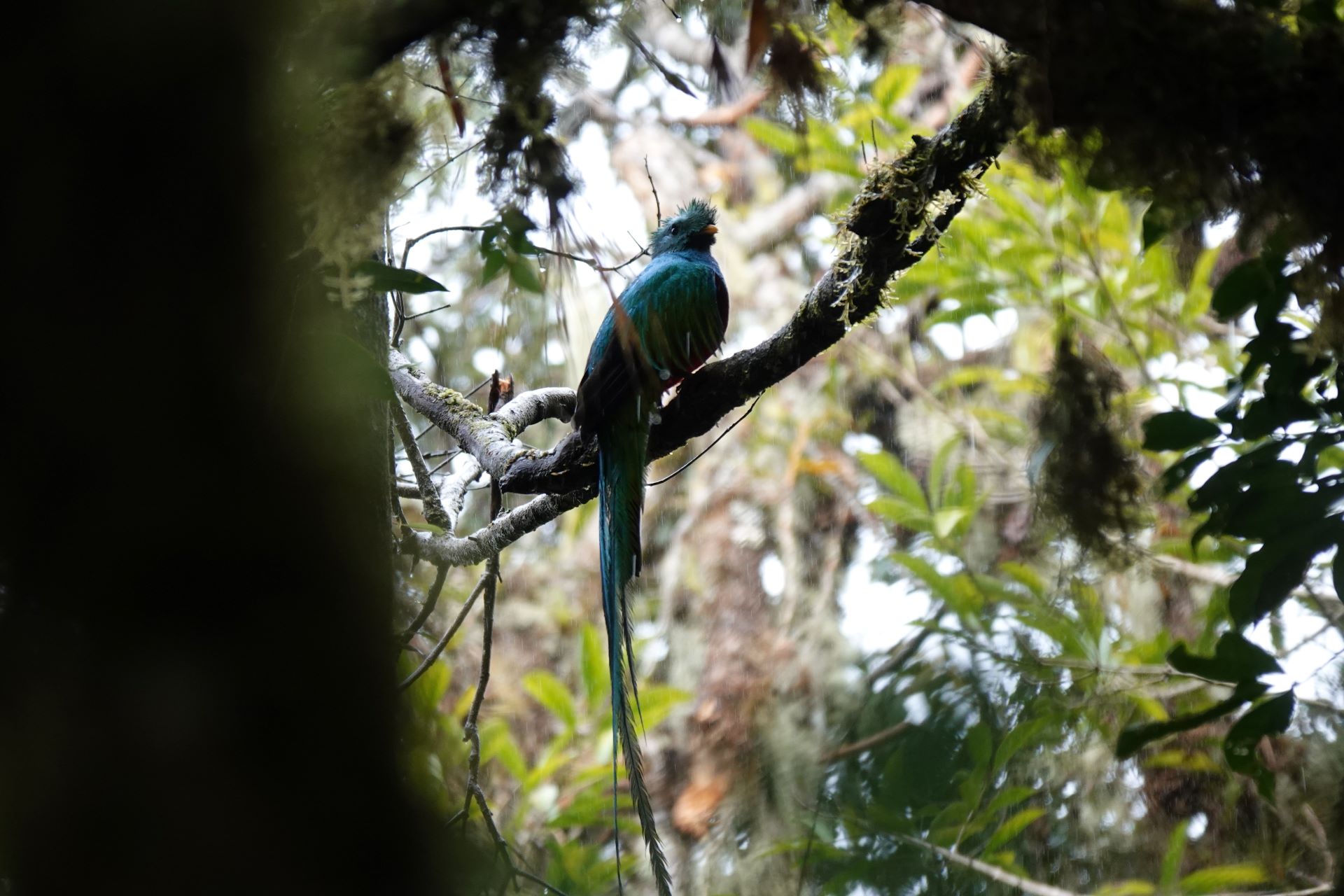
Living alongside the quetzal is a privilege and a daily reminder of the delicate balance of the cloud forest.
Here at Wild on the Farm, we share this experience with visitors who come to witness the cycle of this majestic and elusive bird in its natural habitat.